

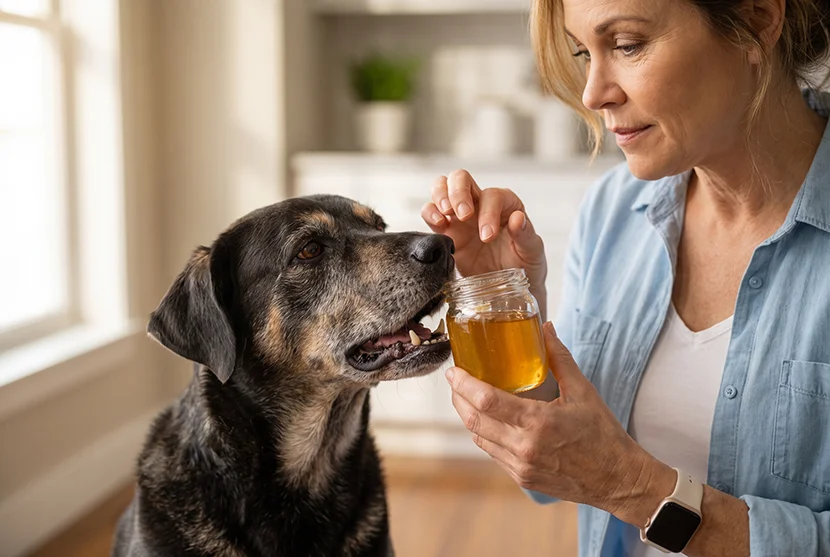
I'll admit it: I felt a little ridiculous standing in my kitchen, squeezing a dab of honey onto Buddy's tongue like a video someone shared in a dog owners' group told me to.
You've probably seen it too – raw honey, a tiny amount, supposed to help with seasonal allergies and a scratchy throat. And to be fair, it wasn't nothing. Buddy's sneezing fits did seem to ease up a little.
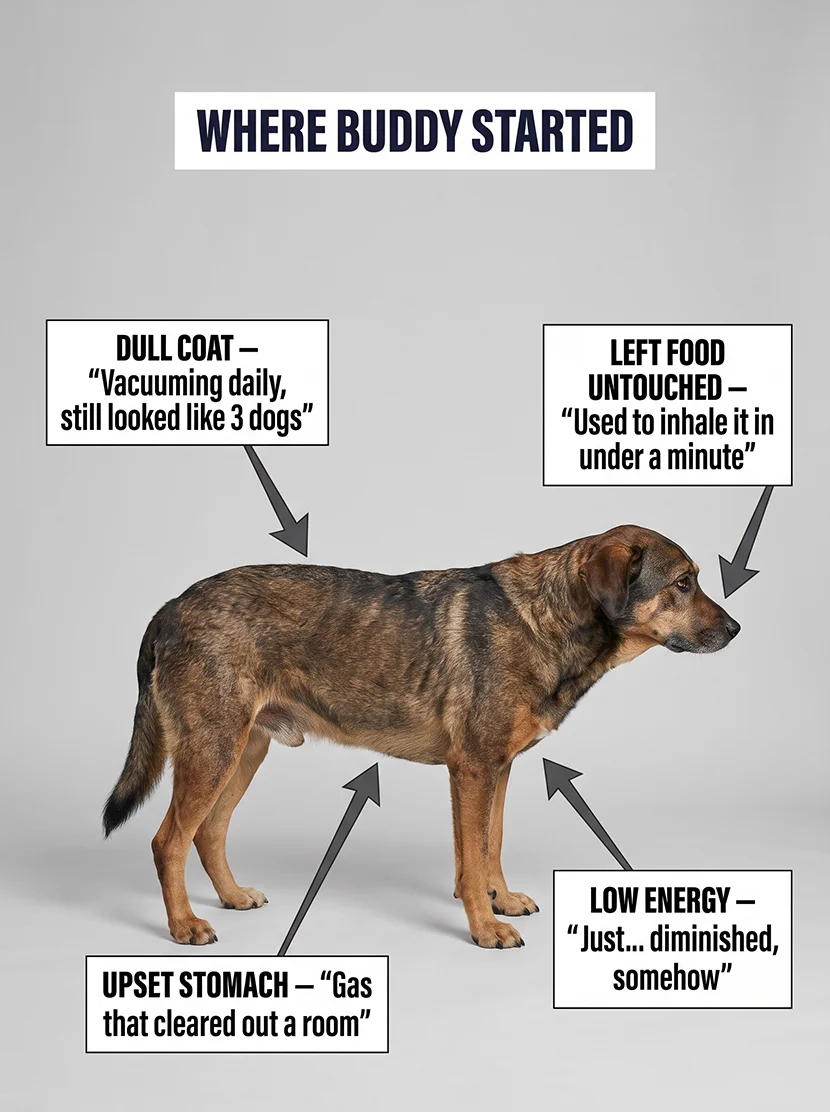
But it didn't touch the actual problem: the dull coat. The gas. The way he'd started leaving food in his bowl some nights – a dog who used to inhale dinner in under a minute. The general, hard-to-name sluggishness that had crept in over the past year.
So when my friend Sandra's Golden Retriever, Cooper, showed up at the dog park looking like he belonged in a dog food commercial – coat gleaming, practically dragging her toward the fetch area – I asked her, half joking:
"Okay, what's your honey trick?"
She laughed. "It's not honey. Ask me what I actually changed."
"So what did you do?"
"I changed his food."
"His food? Cooper's coat looks like that because of food?"
"I know how it sounds," she said. "But ask your vet sometime what actually happens to dog food before it hits the bag."
I didn't know the answer. It turns out almost nobody does.
And by the time Sandra finished explaining what she'd learned from her holistic vet – a guy named Dr. Marty Goldstein – I understood something that honestly annoyed me a little:
I'd been squeezing honey onto Buddy's tongue for a problem that was sitting in his food bowl the entire time.

"It's Not About Home Remedies. It's About How Hot They Cook It."
Here's what Sandra told me, while Cooper enthusiastically destroyed a tennis ball nearby.
Most dog owners try the same handful of fixes when something seems a little off: a little honey for allergies, pumpkin for digestion, a fish oil pump on top of the kibble. And those things aren't nothing – small amounts of raw honey really can act as a mild natural antihistamine, and vets generally say it's fine in tiny doses for healthy adult dogs. (Skip it for puppies or diabetic dogs, though – the sugar content matters there.)
But all of that is patching symptoms one at a time. None of it touches where the actual problem starts: at the factory, before the food ever reaches the bag.
"Here's the thing nobody tells you," Sandra said. "Regular kibble is cooked and extruded at extremely high heat. That's what gives it that crunchy, shelf-stable shape. But it also destroys a huge amount of the natural vitamins and nutrients in the ingredients – which is exactly why most kibble brands have to spray synthetic vitamins back on afterward. The real ones got cooked out."
That wasn't even the part that got me. High-heat processing doesn't just strip nutrients – it can also form compounds called AGEs (advanced glycation end-products), which develop when proteins and sugars are cooked together at high temperatures. Nutritionists have been raising concerns about AGEs in heavily processed food for people for years now – and increasingly, the same questions are coming up for pets.
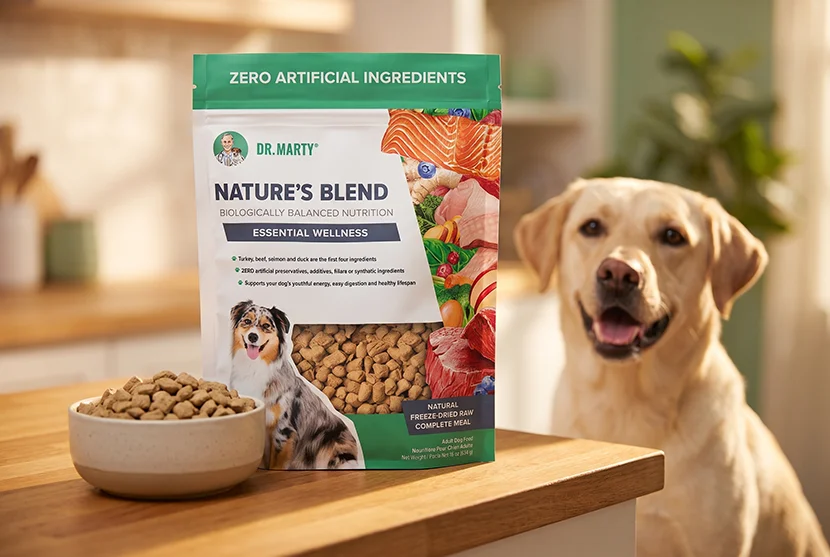
"Nature's Blend doesn't do any of that," Sandra said. "It's freeze-dried instead of cooked – a slow, low-temperature process that pulls the moisture out without ever blasting it with heat. The ingredients stay close to their raw state. And for safety, instead of cooking out bacteria, they use something called High-Pressure Processing – it controls pathogens without needing the heat that destroys everything else."
I stared at her. "So Cooper's just... eating better-preserved food?"
"Basically," she said. "Real turkey, beef, salmon, duck – actual meat, not a mystery 'meat meal.' You add water, wait three minutes. That's the whole prep."
For the first time in longer than I want to admit, I looked down at Buddy – lying by my feet, patiently hoping for kitchen scraps he wasn't getting – and felt something other than resignation: hope.
But to understand why I actually ordered it, I need to take you back to before the honey. Before any of it.
Before the Honey: What Was Actually Wrong With Buddy
Let me take you back to last spring.
Buddy is seven now. Sturdy, sweet, historically obsessed with tennis balls.
And for the better part of a year, he'd become a dog who just seemed... diminished, somehow.
His coat had gone dull, and he was shedding constantly – I was vacuuming daily and it still looked like we owned three dogs.
He'd started leaving food in his bowl some nights, which was new. He used to inhale dinner in under a minute; some nights now he'd walk away with a quarter of it untouched.
His energy had dropped in a way that was hard to pin on any one thing – less enthusiasm for walks, more afternoon naps, a general low-grade sluggishness that wasn't quite "sick" but wasn't quite "fine" either.
And his stomach had gotten unpredictable – loose stools every couple of weeks, gas that cleared out a room, the occasional early-morning accident that meant a lot of carpet cleaner.
I tried the honey, for the sneezing. I tried a pumpkin supplement, for the stomach. I tried a fish oil add-in, for the coat. Each one nibbled at a single symptom without touching whatever was actually going on underneath.
I took him in for bloodwork. Everything came back "normal." "Just keep an eye on him," the vet said. "Some dogs slow down a little as they get older."
He's seven. That answer never quite sat right with me.
Here's what made it worse: I'd started to just accept it. A slightly duller, slightly slower dog. That was apparently just Buddy now.
Then came that Saturday at the park with Cooper.

"Okay, I Needed a Second Opinion"
Before I bought anything, I did three hours of research that night.
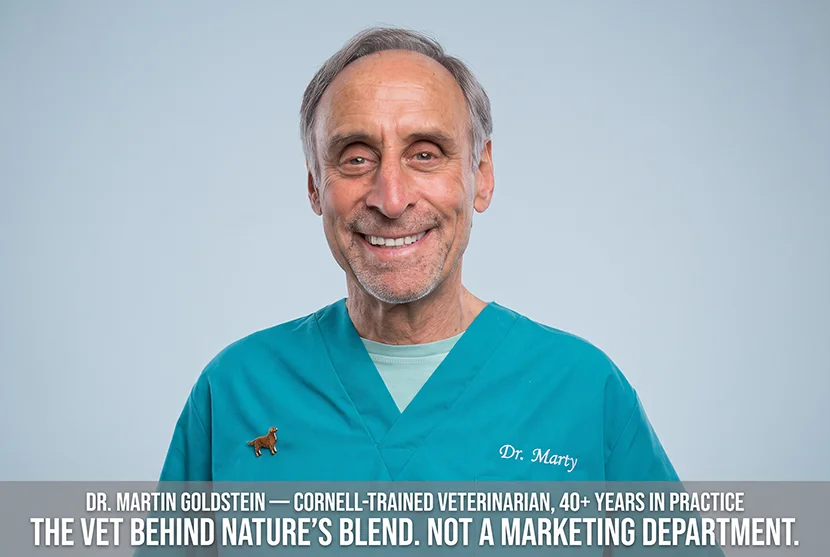
The first thing I confirmed: Dr. Martin Goldstein isn't some influencer with a ring light. He's a Cornell-trained veterinarian with more than four decades of practice, and the author of a genuinely respected holistic veterinary book, The Nature of Animal Healing. He's spent his career on exactly this question – what dogs are actually supposed to eat versus what the pet food industry sells them.
The second thing: the ingredient list itself. Turkey, beef, salmon, duck, real organ meat (liver, hearts – the nutrient-dense stuff), plus sweet potato, blueberries, pumpkin seed, kale, dried kelp. No corn. No wheat filler. No "meat meal" – an ingredient that, once you look into it, is a lot less appetizing than it sounds.
The third thing – the one that got me to actually click "order": the guarantee. Not a vague satisfaction promise. This one is literally called "Your Dog Is Healthier Or It's Free." Ninety days. If your own vet doesn't see a noticeable improvement, you send back the unused portion and get every cent back.
A vet, in writing, betting his own guarantee on your dog's bloodwork and body condition. Not a marketing department. Him.
The fourth thing – and this one made me smile a little: Cesar Millan, the trainer half the country has seen on TV, is a partner and on-camera presenter for the brand too. I don't know that a celebrity endorsement should ever be the deciding factor on its own, but it told me I wasn't the only skeptic they'd already won over.
So that night, I ordered the 3-bag package – enough to get through a real transition and into the weeks where changes actually show – closed my laptop, and thought:
"Okay. Worth a shot. Better than another honey squeeze."

Week 1: "Wait… He's Actually Finishing His Bowl?"
The bag arrived three days later.
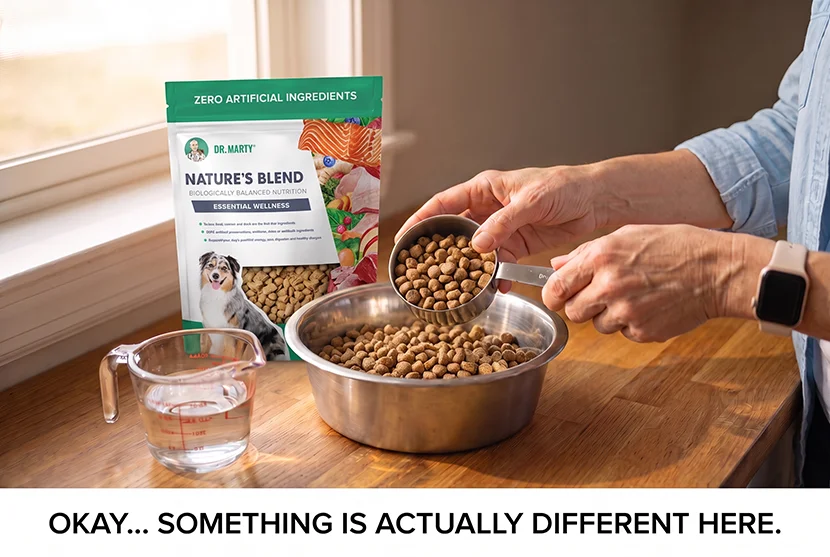
Prep was almost insultingly simple: measure out the nuggets for Buddy's weight, add water, wait three minutes. Done.
Day 1: Buddy sniffed it suspiciously – new food always gets the suspicious sniff – then ate the entire bowl in under two minutes. He's been a picky eater for months. This was new.
Day 4: His energy at feeding time was noticeably different – more tail-wagging, more of that "let's GO" bounce he used to have as a younger dog.
Day 6: I noticed his stool changes first, actually. Firmer, more consistent, none of the loose-stool surprises we'd been dealing with for months.
I didn't get ahead of myself. I'd tried "fixes" before – the honey, the pumpkin, the fish oil – and I wasn't about to celebrate over one good week.
But I remember standing in the kitchen thinking, quietly:
"Okay… something is actually different here."
Week 2: The Coat I Almost Didn't Notice
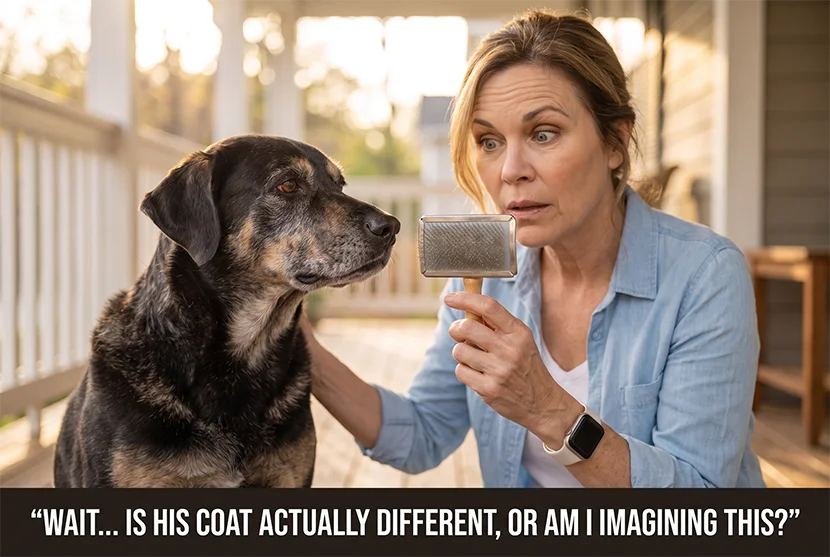
By the second week, I was brushing Buddy on the back porch – a weekly ritual that usually left a small tumbleweed of loose fur behind – and there just... wasn't as much.
I actually stopped and checked the brush twice.
I didn't say anything to anyone – not even Sandra. I'd been fooled by "good weeks" before, only to watch the dullness creep back the next month.
But I remember thinking, running my hand along his side:
"Wait… is his coat actually different, or am I imagining this?"
Weeks 3–4: The Comment That Sold Me
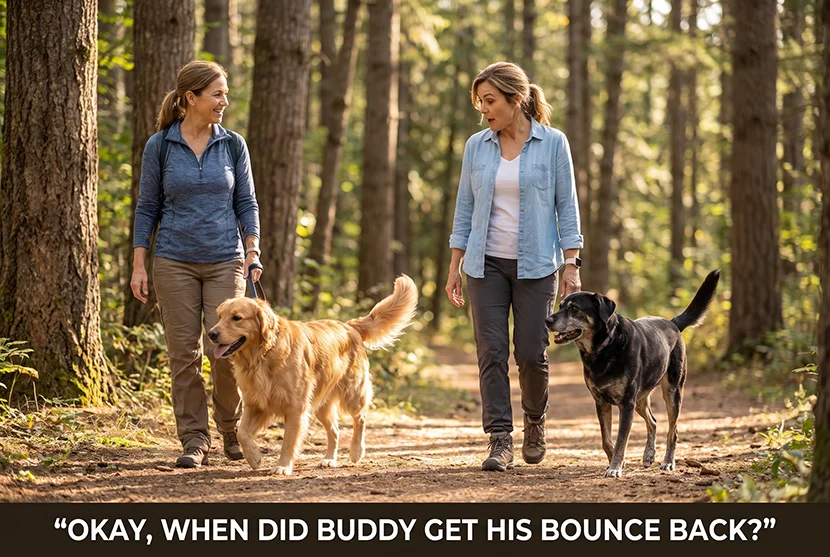
By week three, I took Buddy on a hike we hadn't attempted in over a year – nothing extreme, just a longer loop than our usual walk around the block.
He kept pace the entire way. No dragging. No "can we turn around now" body language forty minutes in.
Sandra, who joined us with Cooper, looked at him at the halfway point and said: "Okay, when did Buddy get his bounce back?"
Here's why that comment mattered: she had no idea I'd switched his food until I told her. She wasn't being polite. She was genuinely surprised.
That's when I knew it wasn't a fluke.
Month 2: "What Are You Feeding Him?"
By the end of the second month, other people started noticing – including, finally, our own vet at his annual checkup.
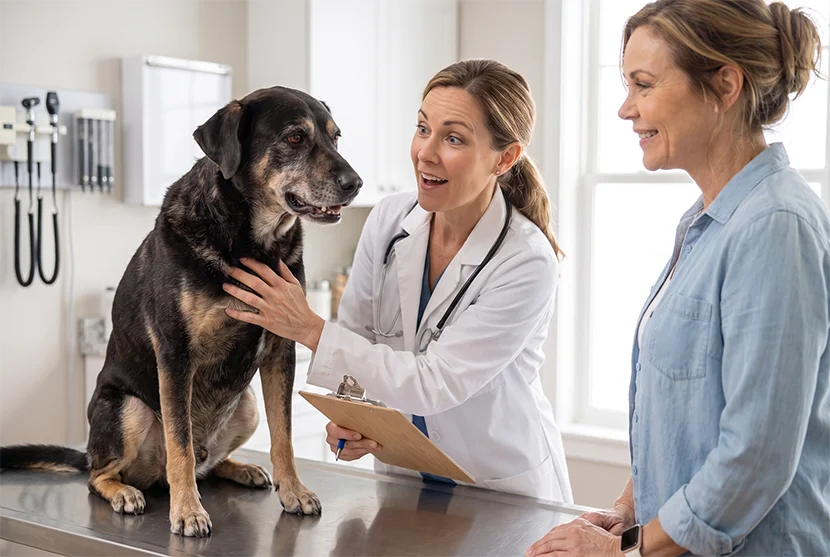
She paused mid-exam and asked, unprompted: "What are you feeding him? His coat looks noticeably better, and his weight is right where I'd want it."
I told her. She actually wrote it down, which she'd never done for a food brand before.
The stomach issues – the loose stools, the gas, the occasional accident – had quietly stopped, the way you don't notice a headache is gone until you realize you haven't had one in weeks.
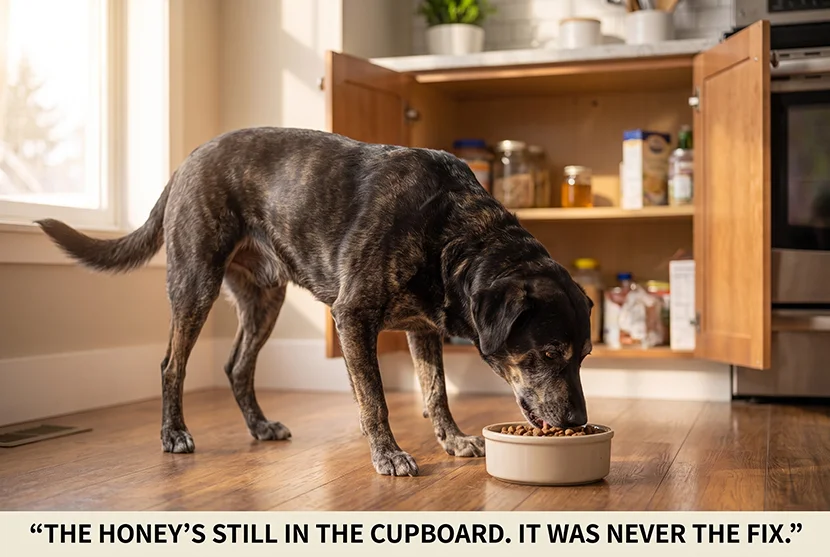
And the honey? I still keep it in the cupboard for the odd sneezing fit. But it was never the fix. It was never going to be.
Month 3: The Bonus Effects Nobody Mentions
Around month three, a few things showed up that had nothing to do with the original list of complaints.
His breath got noticeably better – less of that instant recoil when he'd yawn near your face.
He seemed calmer overall – less of the restless pacing he used to do in the evenings.
Was it magic? No. He's still a seven-year-old dog. He still has the occasional off day. I'm not pretending otherwise.
But he's not a slightly duller, slightly slower version of himself anymore. He's just Buddy again.
So What Exactly IS Nature's Blend?
By now you're probably asking the same question I asked Sandra at the park.
What's actually different about this food?
Here's what I learned.
Nature's Blend was developed by Dr. Martin Goldstein – a Cornell-trained veterinarian with over four decades in practice and the author of The Nature of Animal Healing. Not a pet food conglomerate. A working vet who got tired of watching diet-related problems show up again and again in his own patients.
The formula is built around a few core ideas:
- Real meat, not meat meal. Turkey, beef, salmon, and duck as actual named ingredients – plus organ meat (beef liver, turkey liver, turkey hearts), the nutrient-dense parts wild canine diets would prioritize first.
- Never Kibbled™. Dr. Marty's own term for the fact that this food is never extruded and blasted with the extreme heat standard kibble production uses. Instead, it's freeze-dried – moisture removed through a slow, low-temperature vacuum process rather than hot-air cooking.
- No cooked-in AGEs. Because the food is never subjected to the same high, prolonged heat as conventional kibble, it avoids the advanced glycation end-products that form under those conditions – the same compounds nutritionists have raised concerns about in heavily processed human food.
- High-Pressure Processing for safety, instead of heat. Pathogens are controlled through pressure rather than temperature, so the nutritional profile of the raw ingredients stays intact.
- Whole-food additions, not filler. Sweet potato, apples, blueberries, carrots, cranberries, pumpkin seed, spinach, dried kelp, broccoli, kale – antioxidant and fiber sources, not corn or wheat bulking agents.
A few numbers worth knowing, straight from the label:
- 81% real premium cuts of meat by formulation.
- 40% crude protein minimum – well above what a typical bag of dry kibble lists.
- No artificial preservatives or synthetic vitamin powders – naturally preserved rather than chemically stabilized.
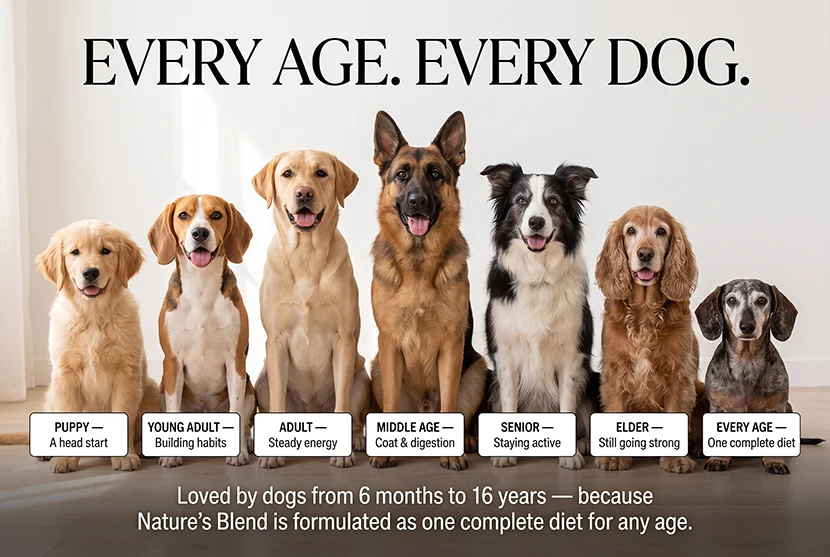
And according to Dr. Marty's own FAQ, it's formulated as one complete diet for any breed, any age, any health condition – not a different bag for every size and life stage like most brands push.
Prep, again, could not be simpler: measure the recommended amount for your dog's weight, add water, wait three minutes. Done.
Don't Take My Word for It – Real Stories From Dog Owners
⭐⭐⭐⭐⭐ "Hank Thrives on Dr. Marty's Nature's Blend" – Pet age: 12+ years
"Hank has been eating Nature's Blend for probably over 5 years. He just turned 16. Has no grey hair, doesn't see or hear as well, but he can smell and he never hesitates to eat. I use it as a topper with his regular food. He runs, jumps, and spins. People can't believe he's 16."
⭐⭐⭐⭐⭐ "Best Food" – Pet age: Under 1 year
"Bailey loves the food and I love knowing it is good for her – no harm from the type of cheap ingredients and processing that can be harmful to her. Her routine is regular, she eats then goes outside like clockwork. Love the consistency."
"But Will It Work for MY Dog?"
The question I asked, and the one you're probably asking now.
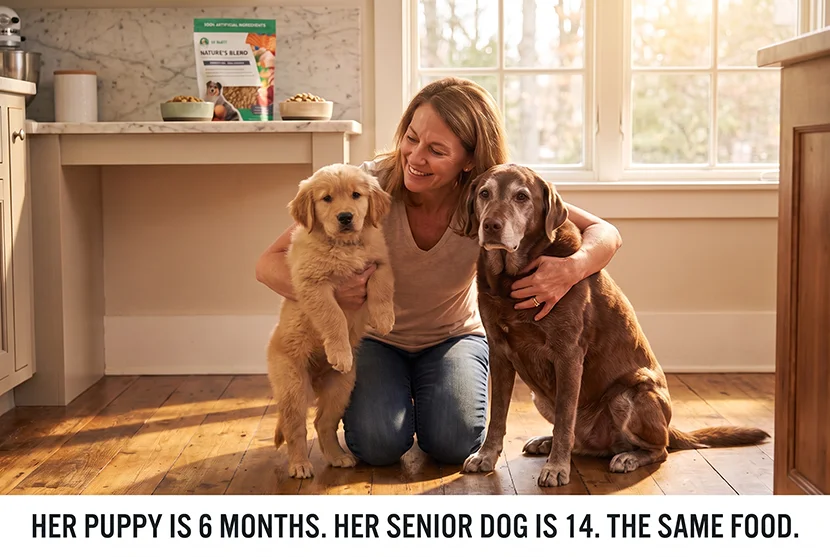
According to Dr. Marty's own materials, this formula was designed as the best overall diet for dogs of any breed and in any health condition – not something you need to match to a specific size, age, or issue.
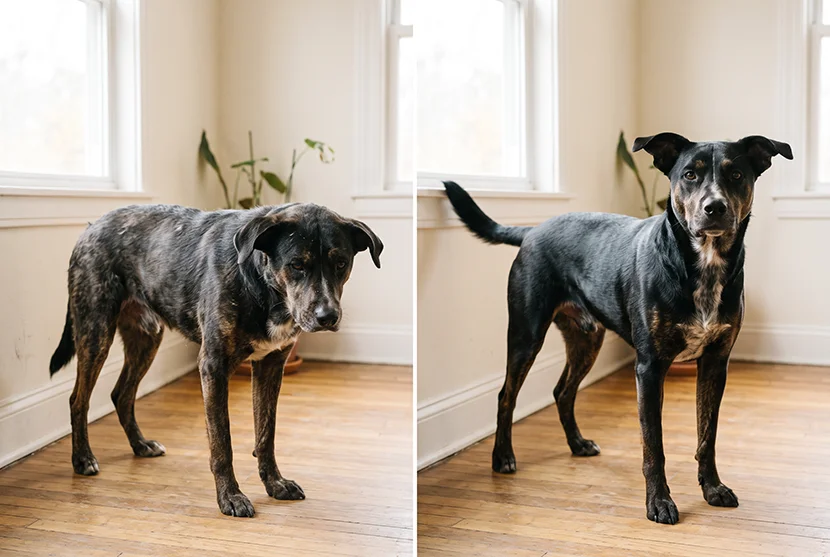
Here's a realistic timeline based on what I actually experienced:
- First week: Appetite and enthusiasm at mealtime often shift first – many owners notice their dog finishing bowls they used to pick at.
- Weeks 2–4: Coat quality and shedding tend to show up here, along with steadier energy.
- Month 2 and beyond: Digestion, weight, and overall vitality tend to show the most visible changes – the kind your own vet will likely comment on at a checkup.
The keys are the same two things that worked for Buddy: consistency (every meal, not just when convenient) and patience (give it the real 90-day window the guarantee is built around).
As always, loop your own veterinarian in on any diet change, especially if your dog has an existing health condition – and check with them before giving any human food, including honey, as well.
Where to Get It (And How Not to Overpay)
Nature's Blend is sold through the official Dr. Marty website.
- 1 Bag – $30.95 (regular $59.95, save 48%)
- 3 Bags – $88.35 (regular $179.85, save 51%) – this is the package I bought. Enough to get through a real transition period and into the weeks where the bigger changes start showing.
- 6 Bags – $170.70 (regular $359.70, save 53%, the best per-bag price)
Free shipping on all U.S. orders over $50. Subscribe & Save options are available if your dog ends up a permanent convert (mine did).
And it's backed by the "Your Dog Is Healthier Or It's Free" guarantee – a full 90 days, and if you and your vet don't see a real improvement, you send back the unused portion for a full refund.
The real risk isn't trying it. It's another year of honey squeezes and supplement patches for a problem that starts at the food itself.
CHECK AVAILABILITY & CLAIM YOUR DISCOUNT →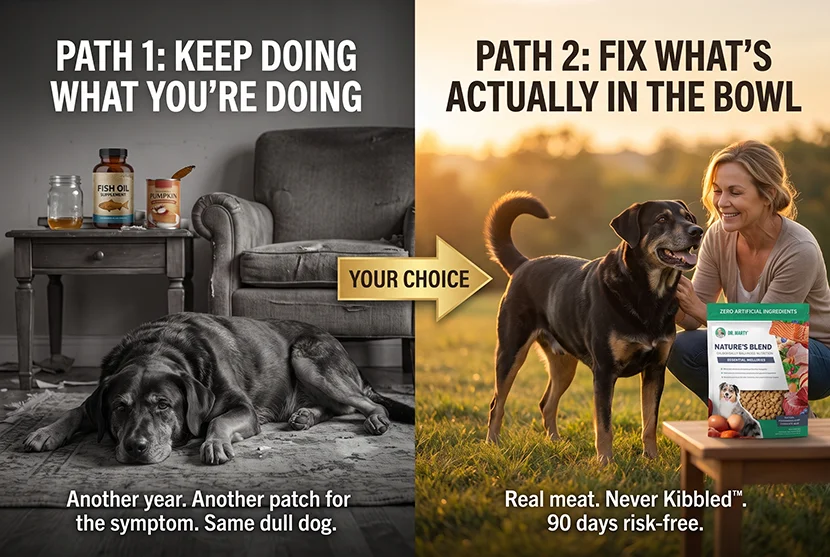
My Advice to You (Dog Owner to Dog Owner)
I don't know your dog. But if you've read this far, I'm guessing you've got your own version of the honey trick – some small fix that helps a little without touching the actual problem.
Option 1: Keep patching symptoms one at a time. Honey for the sneezing. Pumpkin for the stomach. Fish oil for the coat. Same slightly duller dog underneath it all.
Option 2: Try the food change – real meat, gently processed instead of high-heat cooked, built by an actual vet, backed by a 90-day guarantee that puts the risk on them, not you.
If it works for your dog the way it worked for Buddy and for Cooper, you'll wonder why nobody mentioned how kibble is actually made before.
If it doesn't? You send it back. You've lost nothing but the time it took to find out.
I know which choice I'm glad I made – and so, I suspect, is Buddy.
Free Shipping on U.S. Orders Over $50 | 90-Day "Your Dog Is Healthier Or It's Free" Guarantee
★★★★☆ 4.7 out of 5 – based on 23,684 customer reviews
Not my rating – theirs. Nearly 24,000 dog owners, and the breakdown is honest: the vast majority land at 4 or 5 stars, with a smaller cluster of lower ratings that mostly mention the price or dogs who took a few tries to warm up to the texture. That tracks with what I'd expect from a real, unfiltered review base rather than a cherry-picked one.
CHECK AVAILABILITY NOW →